The invitation arrived, and with it, a glimmer of hope. The meeting took place in their party room, a space that reflected the personalities of its residents: fun, open-minded, the kind of people who actually used their amenities as a community. It wasn’t the frigid, overly formal setting I have come to expect from condo board meetings. Instead, it felt lived-in, social—a place where discussions were not just about rules but about possibilities.
This was a condo board downtown, a group of young professionals who spoke the language of architecture and design. They saw their building as more than a collection of units; they saw it as a presence—a structure with a past and a future. They were not interested in generic upgrades or neutral palettes. They wanted to talk about materiality, the way light shifts through a corridor, and the way a lobby can create an experience before a resident even steps inside their home. It was refreshing. Almost suspiciously so.

As I listened to them, I found myself thinking about Rise and Sprawl: The Condominiumization of Toronto, a book I had recently read by Hans Ibelings and PARTISANS, a progressive Toronto-based architectural firm. It reads like a scathing love letter to the city’s skyline:
It made me think about my business: the refurbishment of these structures—the “lipstick” of the interior finishes, so to speak. We usually arrive just as the scent of “new” has faded, the builder-grade materials are waving the white flag, and the previous refurbishment is already looking like a nostalgic relic from a trend that never should have happened.
Renovation Condo projects should be about evolution and strengthening the identity of a place. Instead, it so often becomes an exercise in making things palatable.
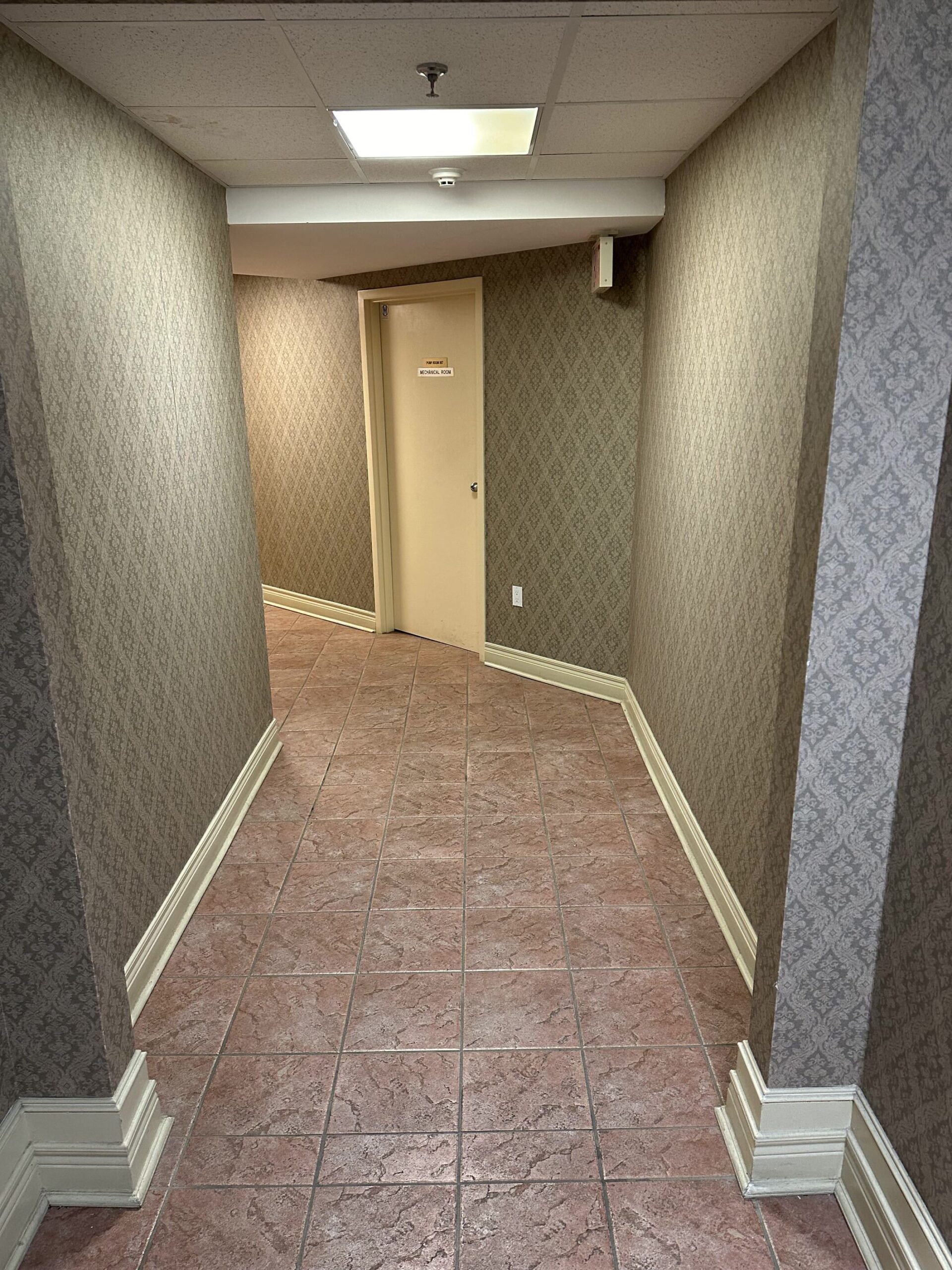
Dissolving Corridors: The spaces I walk through daily—corridors that dissolve into one another and lobbies drained of personality.
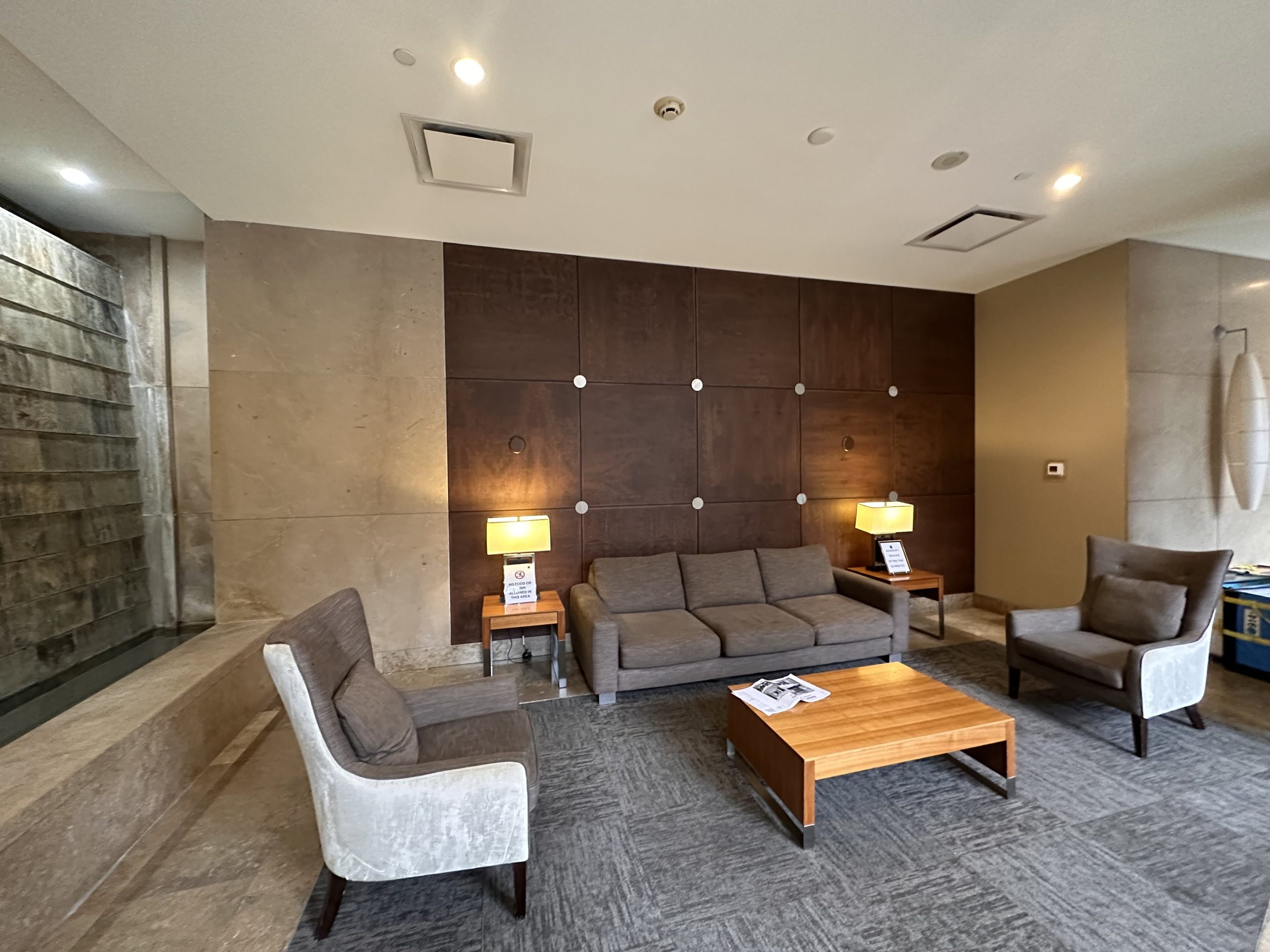
Design for No One: Common areas designed for no one in particular.
The Erosion of Story: When I step into a condo slated for renovation, I see the potentiality of its story. But the process trims it down, sands off the details, and rounds out the edges. A continuity in monotony.
Budgets dictate, boards hesitate, and choices shrink. Paisley broadlooms once considered luxurious are discarded in favor of non-offensive gray. Wall coverings and other surface tones are carefully selected to be neither too warm nor too cold, ensuring they please absolutely no one but also offend no one.
Avoidance Over Love: These are not choices made for the love of design; they are choices made to avoid blame.
Shared Responsibility: The developers who build with one eye fixed firmly on resale value; the Toronto General Contractors who love their “cheap and cheerful” solutions (literally, one of my former boss’s favorite phrases); the designers who know that pushing too hard means losing the job; and the boards who want change, but not too much of it.
And so, sameness wins again and again, not because it is better, but because it is safer.
And yet, there are those rare moments:
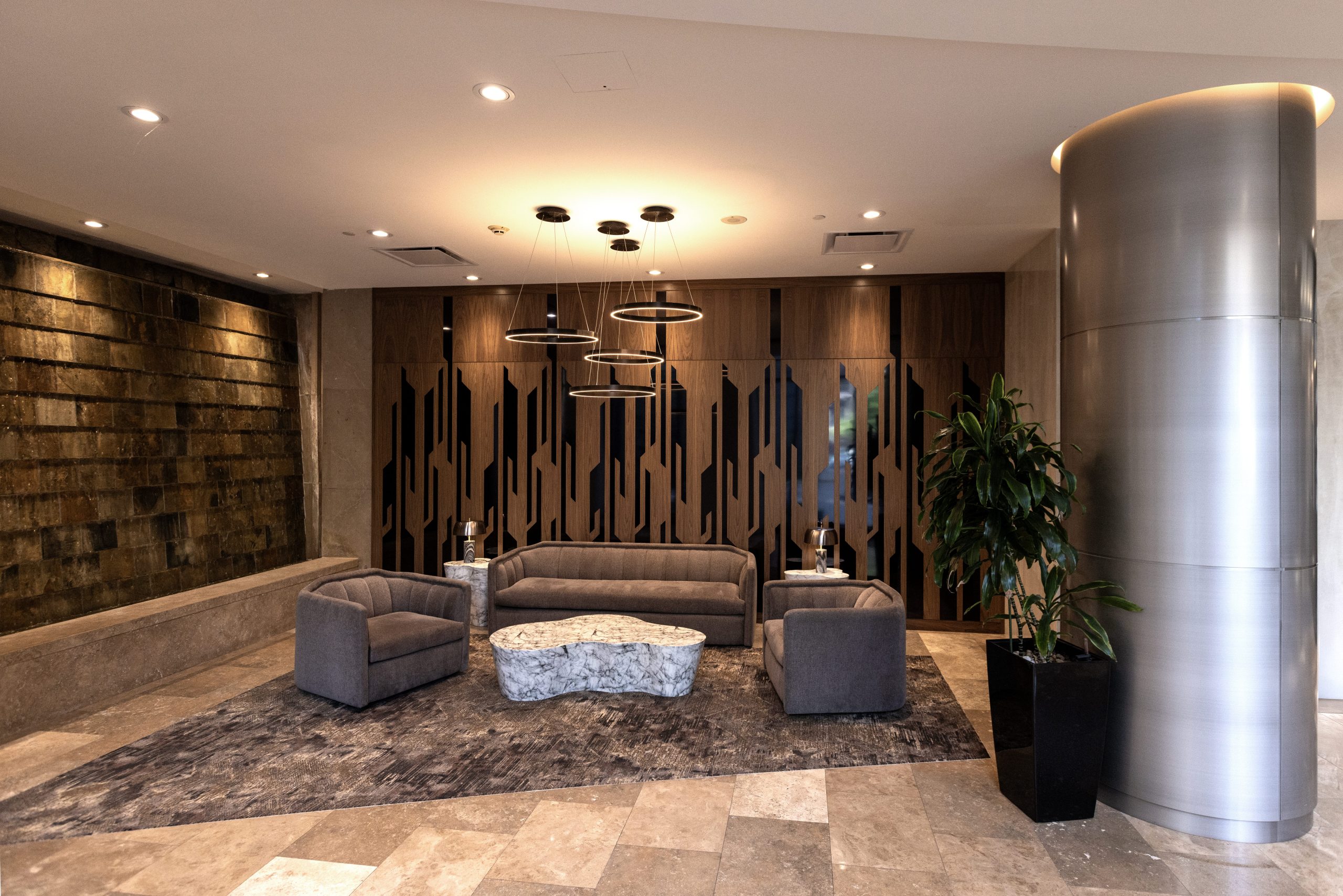
A lobby that refuses to blend into the background.
A corridor that does not feel like an afterthought.
A Condo Renovation that does not strip a place of its character but builds on it.
These are the moments that remind me why I do this work—why I still hold on to the idea that refurbishment can be more than a series of compromises. A city is not just its skyline, and a home is not just its walls. The spaces we pass through shape us, whether we realize it or not. If we surrender entirely to the logic of ubiquity, we erase the very things that give meaning to a place.
Maybe the hardest work for Renovation Companies in Toronto is not just in choosing the best finishes or the most durable materials. Maybe the hardest work is making the argument that we deserve something more. My mind jumps back to the meeting. Will this project be one of those rare exceptions? Will this board’s enthusiasm hold? Or will they, like so many before them, succumb to the slow, grinding pressure of budgets and risk aversion? Time will tell. Stay tuned.
At Congruent Build, we believe your building’s interior should be a presence, not just a collection of units. As leading Toronto Contractors, we help progressive boards move past architectural mediocrity. If you are looking for a Toronto General Contractor who advocates for design integrity and technical excellence, let’s start a conversation.