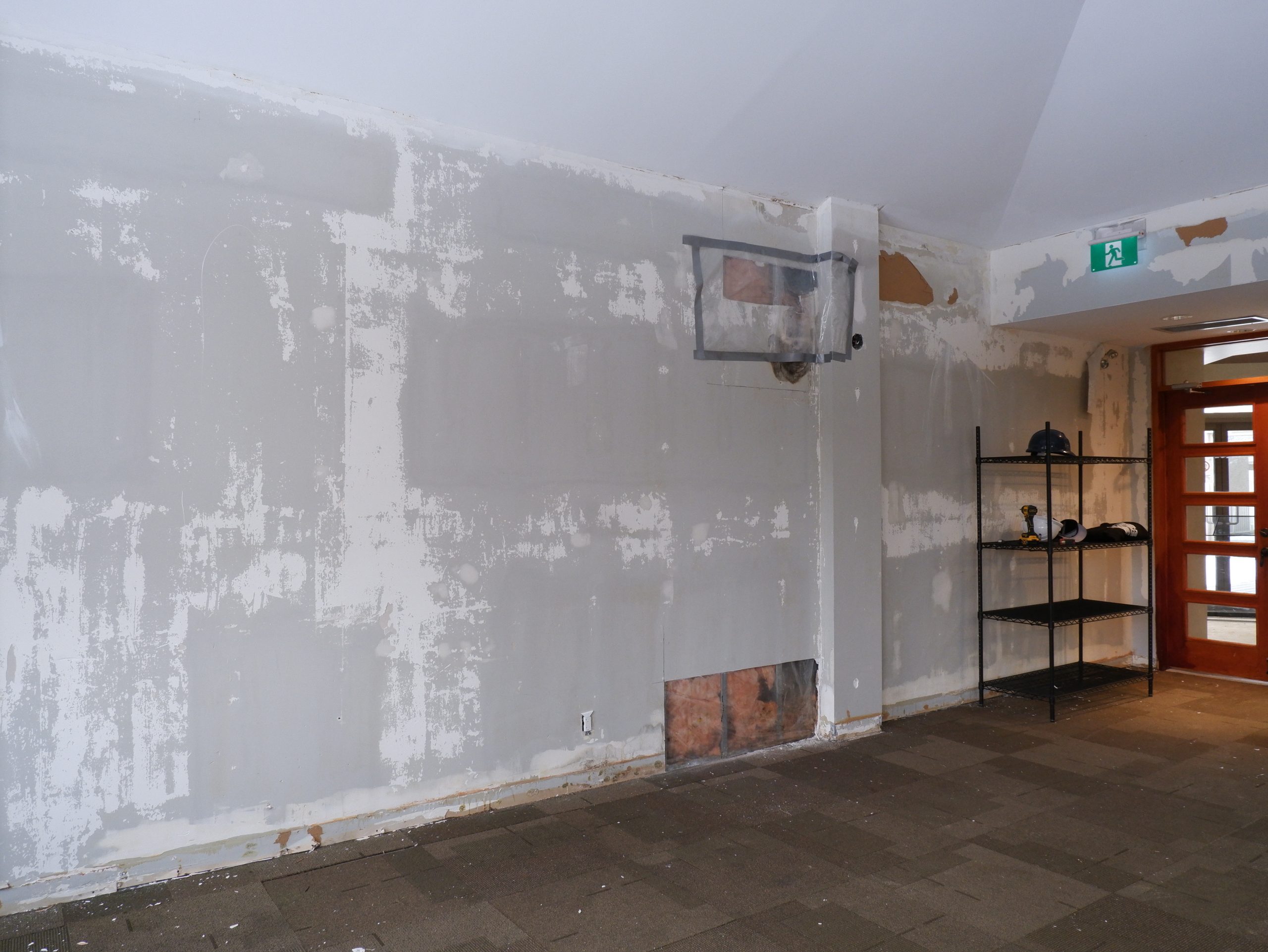
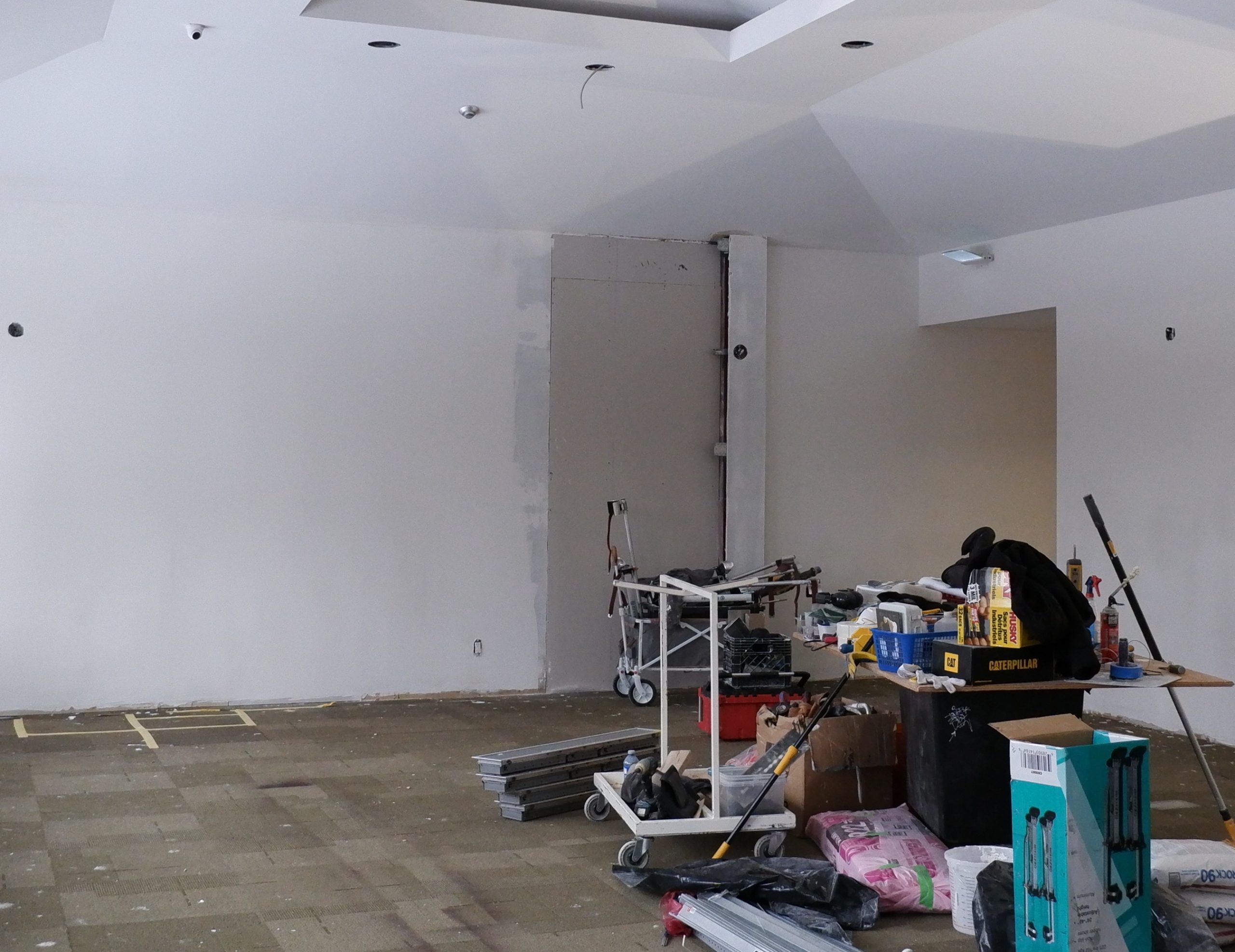
There is one thing every corridor refurbishment teaches you: the real work begins only after the wallcovering comes off. That is when you discover what was hidden, and what it will truly take to make it right. Every refurbishment tells a story. Sometimes you read it in the design choices; other times, you find it in the layers that were never meant to be seen.
When the old wallcovering comes off, the truth comes with it. You see:
This is rarely caused by one single factor. It is usually a combination of building legacy, humidity, and cumulative workmanship layered over time.
This is not unusual; it is predictable. After wallcovering removal, you can safely assume that at least 25% of the walls will need patching or skim coating before new finishes can be applied. In many buildings especially older structures or those that have gone through several refurbishment cycles every single wall may require repair once the surface is exposed.
Refurbishment is about building over history, not starting fresh. That uncertainty is not a flaw in the process; it is the process.

None of this should ever be treated as an “extra.” It is remediation the invisible correction that allows the visible finish to succeed.
For Boards & Property Managers: Carry a contingency. During the pricing stage, ask specifically what percentage of patching has been assumed.
For Consultants: Include substrate repairs as a provisional or allowance item in tender documents to ensure clarity.
For Design-Build Processes: Ask the Toronto General Contractor upfront how these conditions will be priced once the walls are exposed.
In refurbishment, we are not only designing forward; we are also repairing backward. That is the part no one photographs.
Excellence is built from the substrate up. At Congruent Build, we specialize in the technical remediation that others overlook. As leading Toronto Contractors, we don’t just design forward; we repair backward, ensuring your building’s history doesn’t compromise its future.